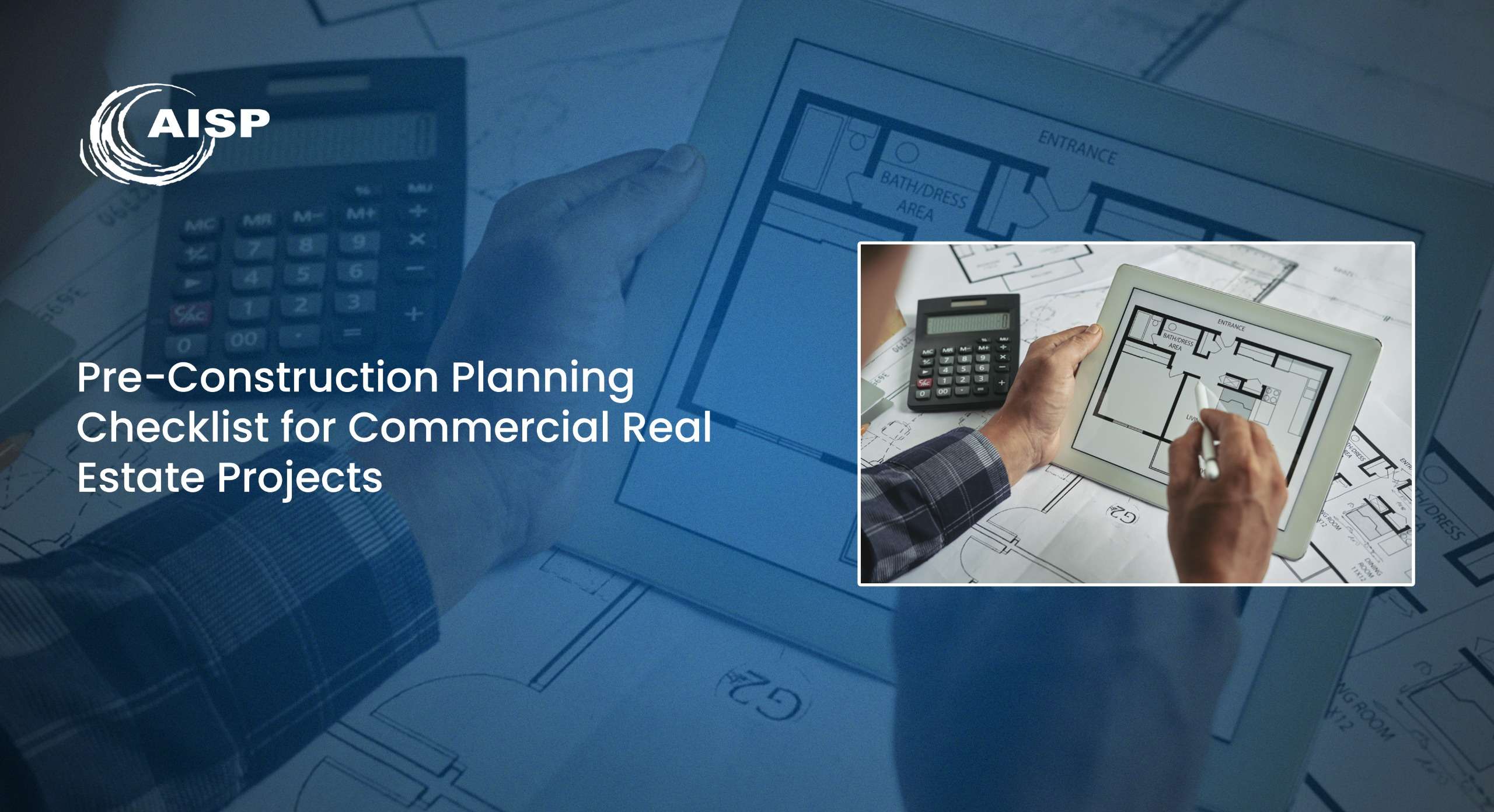
Pre-Construction Planning Checklist for Commercial Real Estate Projects
Introduction
Commercial real estate projects are complex, high-investment ventures where even small planning gaps can lead to significant financial and operational setbacks. From office spaces to malls and hotels, every successful development begins long before construction starts.
This is where real estate project consultants play a crucial role. A well-defined pre-construction plan ensures clarity, reduces risks, and sets a strong foundation for execution.
In this blog, we break down a complete pre-construction planning checklist that helps developers streamline their projects and achieve better outcomes.
Why Pre-Construction Planning is Critical?
Before breaking ground, developers must ensure that every aspect of the project is carefully analysed and aligned. Poor planning at this stage can lead to delays, budget overruns, and compliance issues.
Effective pre-construction planning helps in:
- Reducing uncertainties and risks
- Improving cost control and budgeting
- Ensuring regulatory compliance
- Enhancing project efficiency and timelines
This phase acts as the backbone of the entire project lifecycle.
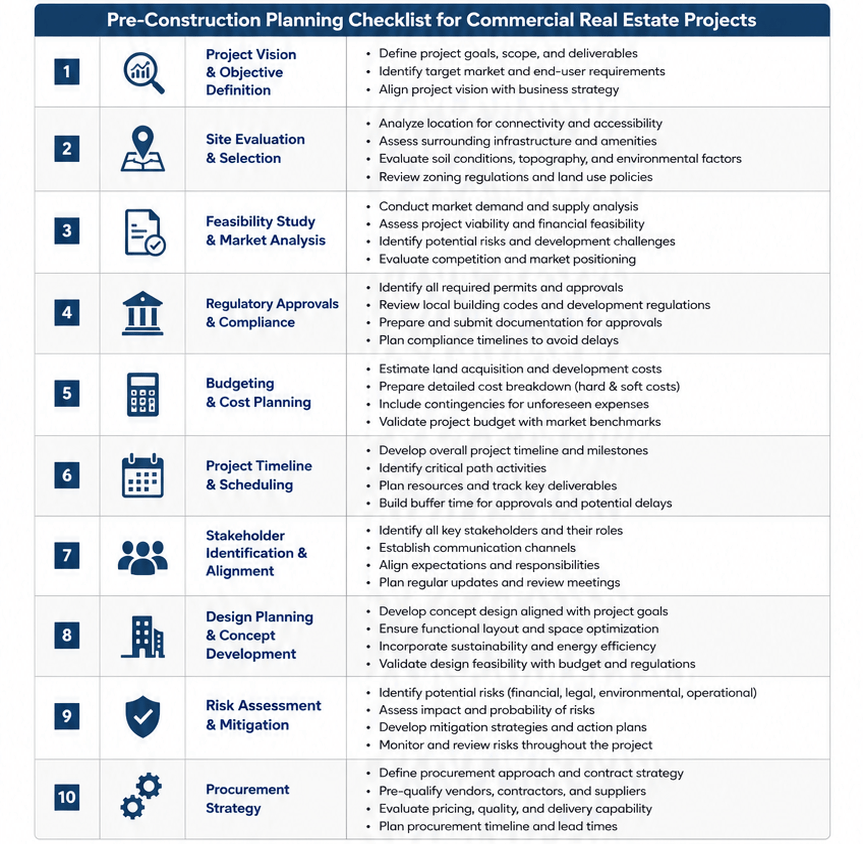
Pre-Construction Planning Checklist
A structured checklist helps developers and stakeholders stay aligned and avoid missing critical steps.
1. Feasibility Study and Market Analysis
Understanding the viability of a project is the first and most important step.
Key considerations include:
- Demand analysis for the specific property type
- Location assessment and accessibility
- Competitor analysis
- Financial feasibility and ROI projections
A detailed feasibility study ensures that the project is aligned with market realities.
2. Land Due Diligence
Before acquiring or developing land, thorough verification is essential.
Checklist includes:
- Legal ownership verification
- Land use and zoning regulations
- Title clearance and dispute checks
- Environmental and regulatory restrictions
Skipping due diligence can lead to major legal complications later.
3. Budget Planning and Cost Estimation
Accurate budgeting is critical to avoid financial strain during execution.
Important aspects:
- Construction cost estimation
- Contingency planning
- Cash flow management
- Vendor and material cost analysis
Real estate project consultants help create realistic budgets that align with project goals.
4. Design and Concept Development
The design phase defines the functionality and appeal of the project.
Key elements:
- Architectural planning
- Space utilisation and layout design
- Sustainability considerations
- Alignment with target audience needs
A strong concept ensures better market acceptance and long-term value.
5. Regulatory Approvals and Compliance
Obtaining approvals is often one of the most time-consuming steps.
Ensure the following:
- Building plan approvals
- Environmental clearances
- Local authority permissions
- Compliance with safety regulations
Delays in approvals can significantly impact project timelines.
6. Risk Assessment and Mitigation Planning
Identifying potential risks early helps in avoiding disruptions later.
Risk factors include:
- Financial risks
- Construction delays
- Regulatory changes
- Market fluctuations
Planning mitigation strategies ensures smoother execution.
7. Vendor and Contractor Selection
Choosing the right partners is essential for quality and efficiency.
Selection criteria:
- Experience and past projects
- Cost-effectiveness
- Technical expertise
- Reliability and timelines
Proper vendor selection reduces operational challenges during construction.
8. Project Scheduling and Timeline Planning
A clear timeline helps in tracking progress and ensuring timely completion.
Key steps:
- Defining project milestones
- Creating realistic timelines
- Allocating resources efficiently
- Monitoring progress regularly
A structured schedule minimises delays and improves coordination.
9. Resource Planning and Allocation
Efficient use of resources is critical for project success.
Focus areas:
- Labour planning
- Material procurement strategy
- Equipment and technology usage
- Logistics planning
Proper allocation ensures smooth workflow and cost efficiency.
The Role of Real Estate Project Consultants
Managing all these aspects independently can be overwhelming. This is where real estate project consultants bring value.
They provide:
- Strategic planning and feasibility analysis
- Budget control and cost optimisation
- Regulatory guidance and approvals
- End-to-end project coordination
Their expertise ensures that every stage of pre-construction is handled professionally and efficiently.
How AISP Supports Pre-Construction Planning?
AISP plays a vital role in strengthening the foundation of commercial real estate projects through a structured and strategic approach.
Comprehensive Planning Approach
AISP ensures that every project begins with detailed research, feasibility analysis, and data-backed decision-making.
End-to-End Coordination
From concept development to approvals, AISP manages all aspects seamlessly, reducing dependency on multiple stakeholders.
Risk Reduction Strategy
AISP identifies potential challenges early and implements preventive measures to avoid disruptions.
Cost and Time Efficiency
With strong planning and monitoring, AISP helps maintain budget discipline and ensures timely project progression.
Industry-Specific Expertise
Whether it is malls, hotels, or commercial complexes, AISP brings specialised knowledge tailored to each segment.
Conclusion
Pre-construction planning is not just a preparatory phase but a critical determinant of a project’s success. A well-planned project reduces risks, optimises costs, and ensures smoother execution.
By following a structured checklist and working with experienced real estate project consultants, developers can significantly improve their chances of success.
AISP stands as a reliable partner in this journey, offering strategic guidance and end-to-end support to turn vision into reality.
FAQs
What is pre-construction planning in real estate?
It is the process of analysing, planning, and preparing all aspects of a project before construction begins.
Why is pre-construction planning important?
It helps reduce risks, control costs, ensure compliance, and improve overall project efficiency.
How do real estate project consultants help in this phase?
They provide expertise in planning, budgeting, approvals, and coordination, ensuring smooth project execution.
What are the biggest risks in pre-construction?
Legal issues, budget miscalculations, delays in approvals, and poor planning are the most common risks.
How does AISP support developers during pre-construction?
AISP offers complete planning support, including feasibility studies, risk management, cost control, and coordination, ensuring a strong project foundation.