5 Common MEPF Design Mistakes That Can Affect a Project
MEPF systems play an important role in the functionality, safety and efficiency of modern buildings. Mechanical, Electrical, Plumbing and Fire Protection systems need to work together smoothly, which makes proper design coordination essential from the early stages of a project.
However, even small MEPF Design Mistakes can create significant challenges during construction and building operations. Poor coordination, inaccurate drawings, limited space planning or a lack of communication between design and site teams can lead to rework, delays, additional costs and maintenance issues.
Understanding these common design mistakes can help project teams identify potential problems early and make better decisions before they affect construction progress or long-term building performance.
What Is MEPF Design and Why Does It Matter?
MEPF design refers to the planning and coordination of Mechanical, Electrical, Plumbing and Fire Protection systems within a building. These systems support essential functions such as ventilation, power supply, water distribution, drainage, fire safety and overall building comfort. A well-planned MEPF design ensures that these systems fit properly within the building structure and work efficiently together.
MEPF design is important because these services need to be considered alongside architectural and structural requirements from the beginning. Poor planning can result in clashes between services, limited installation space, difficult maintenance access and changes during construction.
5 Common MEPF Design Mistakes That Can Affect Projects
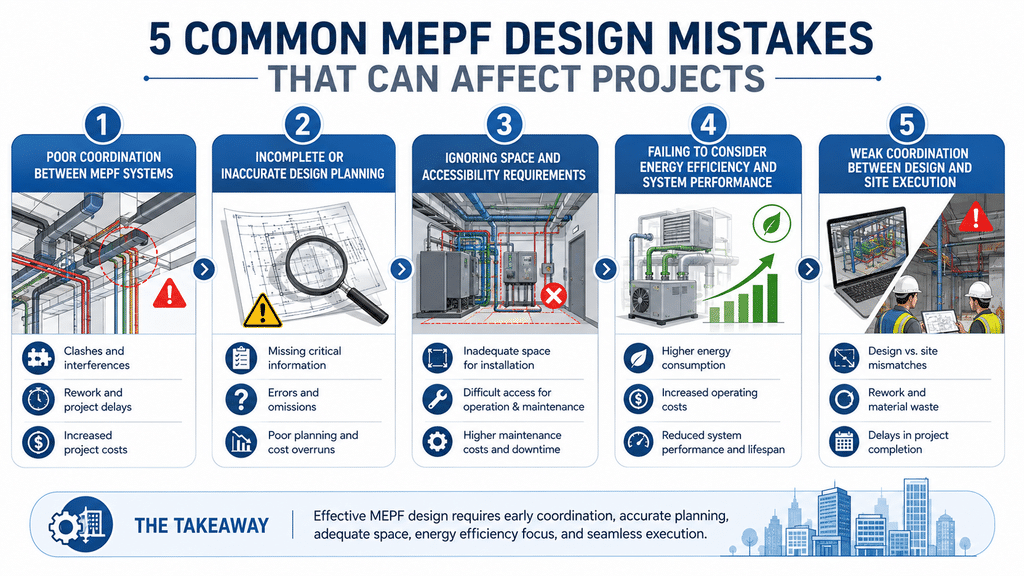
MEPF systems involve multiple services that need to share the same building space and coordinate with architectural and structural elements. When the design process is not properly coordinated, even a small error can create problems during installation and operation. Here are five common MEPF Design Mistakes that can affect project cost, timelines and overall performance.
Poor Coordination Between MEPF Systems
Mechanical, electrical, plumbing and fire protection systems often share limited building space. If these systems are designed without proper coordination, clashes between ducts, pipes, cable trays and other services can occur during installation. Early coordination helps identify such conflicts and reduces the chances of rework, delays and additional costs.
Incomplete or Inaccurate Design Planning
Incomplete drawings, missing details or inaccurate design information can create confusion during construction. When contractors do not have clear and reliable information, changes may be required during execution, which can affect both project timelines and costs. Detailed drawings, accurate calculations and design reviews help minimise these issues.
Ignoring Space and Accessibility Requirements
MEPF equipment and services need adequate space for installation, inspection and future maintenance. If accessibility is overlooked during design, technicians may face difficulties reaching equipment, service panels, pipes or other systems after completion. Considering service clearances and maintenance access during planning helps create a more practical and manageable building.
Failing to Consider Energy Efficiency and System Performance
MEPF systems can have a significant impact on a building’s energy consumption and operating costs. If energy efficiency and system performance are not considered during design, the project may experience higher running costs or inefficient operation. Proper equipment selection, load calculations and performance planning can help achieve better long term efficiency.
Weak Coordination Between Design and Site Execution
Good MEPF design needs effective communication between consultants, contractors and site teams during execution. If design changes or site conditions are not communicated properly, installation may differ from the intended design and create further coordination issues. Regular design reviews and clear communication help ensure smoother implementation and reduce unnecessary rework.
How MEPF Design Mistakes Affect Construction Projects
Costly Rework and Material Wastage
Poorly coordinated MEPF designs can lead to incorrect installations, service clashes and changes during construction. When completed work needs to be modified or removed, it can result in additional labour, material wastage and unexpected project costs. Identifying design issues before execution can help minimise unnecessary rework.
Project Delays and Installation Issues
MEPF design errors can make installation more complicated, particularly when different services need to share the same space. Changes in routing, revised drawings or waiting for design clarifications can slow down site activities and affect other trades. Better coordination at the design stage helps teams execute installations more smoothly and maintain project timelines.
Maintenance and Operational Challenges
Design decisions can continue to affect a building even after construction is complete. Poor equipment placement, limited access to services or inefficient system layouts can make inspection, repairs and routine maintenance more difficult. A well coordinated MEPF design should therefore consider not only installation but also the long term operation and maintenance of the building.
How to Prevent Common MEPF Design Mistakes
Early Design Coordination and Review
Early coordination between mechanical, electrical, plumbing and fire protection systems helps identify potential clashes before construction begins. Reviewing layouts, service routes and equipment requirements together allows design teams to resolve conflicts at an early stage and create a more practical and coordinated MEPF design.
Regular Communication Between Design and Site Teams
Clear communication between design consultants, contractors and site teams is important throughout project execution. Regular discussions help address site conditions, design changes and installation challenges before they become larger problems. Keeping everyone aligned also helps ensure that the approved design is implemented correctly.
Detailed Drawings and Proper Documentation
Accurate drawings and well maintained documentation give contractors clear information about system layouts, specifications and installation requirements. Updated drawings should reflect approved changes so that site teams are always working with the correct information. This reduces confusion, installation errors and unnecessary rework during construction.
Final Thought
MEPF Design Mistakes can affect much more than the design stage. If they are not identified early, they can lead to rework, material wastage, project delays and maintenance challenges. Proper coordination, detailed planning and regular communication between design and site teams can help prevent these issues and support smoother project execution.
AISP supports clients with a structured approach to MEPF engineering design and project coordination. By focusing on design planning, system coordination, site requirements and execution support, AISP helps project teams identify potential MEPF Design Mistakes early and maintain better control over construction activities.
Frequently Asked Questions
1. What are the most common MEPF Design Mistakes?
Common MEPF Design Mistakes include poor coordination between services, incomplete drawings, inaccurate design information, inadequate space planning, limited maintenance access and weak coordination between design and site teams.
2. How can MEPF Design Mistakes increase project costs?
MEPF Design Mistakes can result in rework, material wastage, additional labour and design changes during construction. When errors are identified late, correcting them can become more expensive and may also affect other project activities.
3. Why is MEPF coordination important before construction begins?
Early MEPF coordination helps identify clashes between mechanical, electrical, plumbing and fire protection systems before installation starts. Resolving these issues during the design stage can reduce the risk of MEPF Design Mistakes and unnecessary site modifications.
4. How do MEPF Design Mistakes affect building maintenance?
Poor MEPF design can make equipment and service systems difficult to access, inspect or repair. Considering maintenance space and accessibility during design can help reduce MEPF Design Mistakes that create operational challenges later.
5. What role does site coordination play in preventing MEPF Design Mistakes?
Site coordination helps ensure that the approved MEPF design works effectively under actual site conditions. Regular communication between design teams, contractors and site personnel can help identify practical issues and prevent MEPF Design Mistakes during execution.