Why Safety Checks Matter at Every Stage of Construction
Construction projects involve multiple activities, teams, materials, machinery and changing site conditions. With so many factors involved, even a small safety oversight can lead to accidents, delays or costly disruptions. This is why regular construction safety checks are important throughout the project, from initial planning to final handover.
Safety checks help identify potential hazards early, ensure safe working practices and keep construction activities aligned with required safety standards. When carried out consistently at every stage, they create a safer site while also supporting better productivity, quality and project continuity.
What Are Safety Checks in Construction?
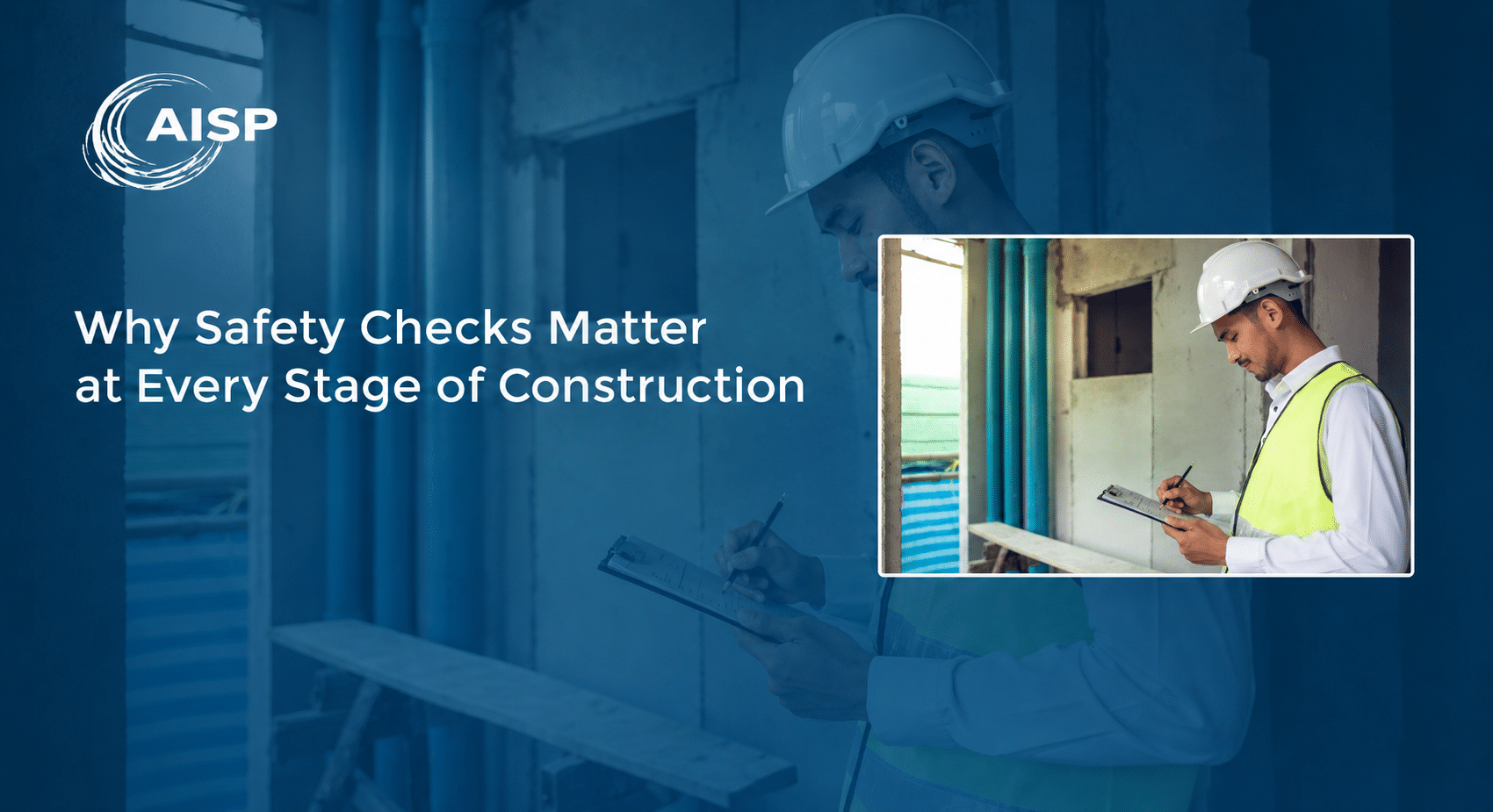
Safety checks in construction are regular inspections carried out to identify hazards, unsafe conditions and potential risks before they cause accidents or disrupt project activities. These checks cover different aspects of a construction site, including equipment, machinery, electrical systems, scaffolding, work areas, protective measures and worker practices.
Construction safety checks should not be treated as a one-time activity. Site conditions can change as the project progresses, so regular inspections are needed to address new risks at the right time. A proper safety check also helps ensure that corrective actions are taken quickly when an issue is identified.
Why Safety Checks Should Begin Before Construction
Safety planning should start before any physical construction work begins. The planning stage gives project teams an opportunity to identify potential risks, understand site conditions and put suitable safety measures in place before workers and equipment arrive on site.
Starting construction safety checks early also helps avoid problems that may become more difficult or expensive to correct once construction is underway. Reviewing the site, drawings, work methods and safety requirements in advance creates a stronger foundation for safe project execution.
Identifying Potential Hazards During Planning
Every construction site has its own risks based on location, project type, surrounding structures, access routes and planned activities. Identifying these hazards during planning allows the team to prepare suitable control measures before work begins.
This may include assessing risks related to excavation, working at height, heavy machinery, material movement, electrical work and emergency access. Early identification makes safety a planned part of the project rather than a response to an incident.
Reviewing Site Conditions, Drawings and Safety Requirements
Before construction starts, site conditions and project drawings should be reviewed carefully to identify areas that may create safety concerns. Access points, temporary works, equipment locations and movement routes should be considered as part of the planning process.
The team should also review applicable safety requirements and establish clear procedures for inspections, reporting and corrective action. This helps everyone understand their responsibilities and supports safer execution throughout the project.
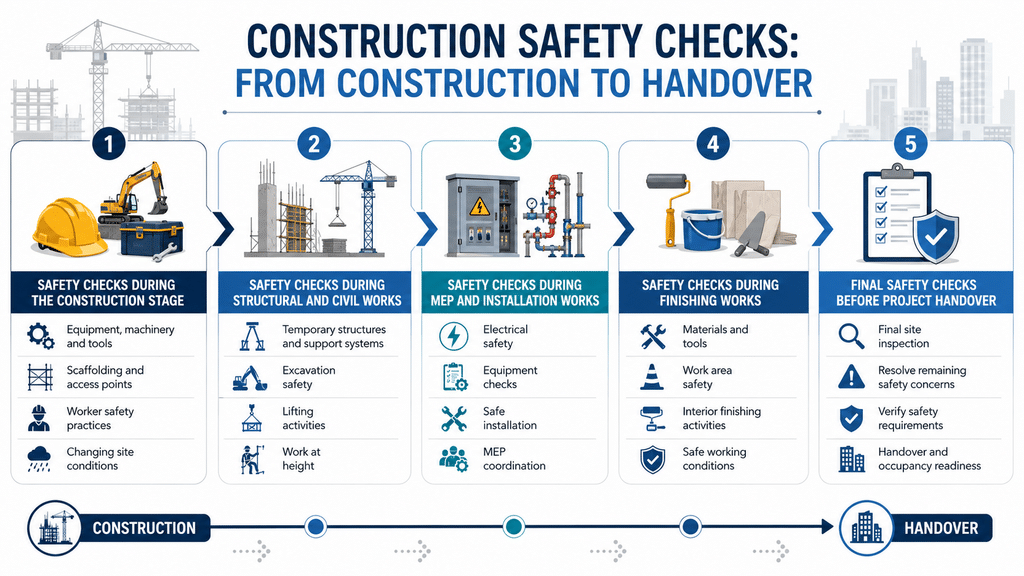
Safety Checks During the Construction Stage
Once construction begins, safety conditions can change quickly as different teams, machinery and materials move around the site. Regular inspections help identify problems early and ensure that work continues in a controlled and safe manner.
Monitoring Equipment, Machinery, and Tools
Construction equipment and tools should be checked regularly to make sure they are in proper working condition. Damaged tools, faulty machinery or poorly maintained equipment can create serious risks for workers and affect project progress.
Routine checks should cover visible damage, operating conditions, safety guards and basic maintenance requirements. Any equipment found to be unsafe should be repaired or removed from use until the issue is resolved.
Checking Scaffolding, Access Points, and Working Areas
Scaffolding, ladders, walkways and access points should remain stable, clear and suitable for the work being carried out. Regular inspections can help identify loose components, blocked routes, uneven surfaces or other hazards.
Work areas should also be kept organised so that workers can move safely and emergency routes remain accessible throughout the construction process.
Ensuring Workers Follow Required Safety Practices
Safety procedures are effective only when they are followed consistently. Site teams should monitor whether workers are using appropriate protective equipment and following established procedures for their tasks.
Regular communication and safety briefings can also help workers understand site-specific risks and respond correctly when conditions change.
Managing Changing Site Conditions
Construction sites rarely remain the same for long. New structures, materials, equipment and work activities can introduce new risks as the project progresses.
This makes regular construction safety checks important throughout the project. Safety measures should be reviewed whenever there is a significant change in the work area, construction sequence or site conditions.
Safety Checks During Structural and Civil Works
Structural and civil activities often involve heavy materials, temporary supports, excavation and work at height. These activities require careful monitoring because an overlooked safety issue can affect both workers and the progress of the project.
Inspecting Temporary Structures and Support Systems
Temporary structures such as formwork, scaffolding, shoring and other support systems should be inspected before and during use. Their stability and condition need to be checked according to the work being carried out.
Regular inspections can help identify damaged components, improper installation or changes that may affect stability. Addressing these issues early reduces the risk of structural failure and unsafe working conditions.
Monitoring Excavation, Lifting, and Work at Height Activities
Excavation work, lifting operations and activities at height require additional attention because they involve significant safety risks. Access, equipment condition, working platforms and protective measures should be checked before these activities begin.
Supervising these operations and carrying out regular inspections helps ensure that workers follow approved procedures and that unsafe conditions are corrected without unnecessary delay.
Safety Checks During MEP and Installation Works
MEP installation brings additional safety considerations to a construction site, particularly when electrical systems, mechanical equipment, tools and services are being installed. Proper coordination between different teams is important to avoid unsafe working conditions.
Electrical Safety and Equipment Checks
Electrical tools, temporary power arrangements, cables and installation equipment should be inspected regularly for visible damage or unsafe connections. Proper isolation procedures should also be followed whenever electrical work requires access to live or potentially live systems.
Keeping electrical work organised and properly monitored helps reduce the risk of shocks, short circuits, equipment damage and other incidents.
Safe Installation and Coordination of MEP Systems
MEP activities often take place alongside civil, structural and finishing work. Poor coordination can create access problems, exposed services or conflicts between different activities.
Regular checks should confirm that installation work is being carried out safely and that services are properly positioned and protected. Good coordination also helps reduce rework while maintaining safer working conditions for different teams.
Safety Checks During Finishing Works
Finishing activities may appear less demanding than structural work, but they can still involve ladders, tools, electrical equipment, materials, dust and work at height. Safety should therefore continue to receive attention until the final stages of the project.
Managing Material, Tools, and Work Area Hazards
Materials and tools should be stored properly and kept away from walkways and access routes. Sharp objects, loose materials, wet surfaces and construction waste should be managed promptly to prevent slips, trips and other avoidable incidents.
Keeping work areas clean and organised makes it easier for teams to move safely and complete finishing activities without unnecessary interruptions.
Maintaining Safe Conditions During Interior and Finishing Activities
Painting, flooring, ceiling installation, joinery and other interior works can create different types of hazards. Ventilation, access equipment, electrical tools and material handling should be monitored according to the activity being performed.
Regular construction safety checks during finishing work help ensure that safety standards are maintained even as the project approaches completion.
Final Safety Checks Before Project Handover
Safety checks should continue until the project is ready for handover. The final stage provides an opportunity to identify any remaining hazards and confirm that the completed areas are safe for their intended use.
Identifying and Resolving Remaining Safety Concerns
A final inspection should cover completed areas, access routes, equipment, installations and other relevant site conditions. Any outstanding safety concerns should be recorded and addressed before handover.
This final review is particularly important because small unresolved issues can become operational problems once the building is occupied or put into regular use.
Verifying Compliance Before Occupancy and Handover
Before handover, the project team should verify that required safety measures and applicable requirements have been addressed. Documentation, inspection records and corrective actions should also be reviewed where required.
A thorough final safety review gives the client greater confidence that the project has been completed responsibly and that known safety concerns have been dealt with before occupancy.
Final Thought
Safety is not something that should be reviewed only when a project is nearing completion. It needs consistent attention from planning and structural work to MEP installation, finishing and final handover. Regular construction safety checks help identify risks early, maintain better site discipline and support smoother project execution.
At AISP, safety is considered an important part of effective project management. From planning and site supervision to quality monitoring and coordination, AISP helps project teams maintain better control over construction activities and address potential risks at the right stage. With a structured approach to project management and on site monitoring, AISP supports clients in delivering safer, better organised and more efficient construction projects.
Frequently Asked Questions
1. How often should safety checks be carried out on a construction site?
Safety checks should be carried out regularly throughout the project rather than at fixed intervals only. The frequency may increase during high risk activities such as excavation, lifting, electrical work and work at height, or whenever site conditions change.
2. What should be checked during a construction safety inspection?
A construction safety inspection can cover equipment, machinery, scaffolding, access routes, work areas, electrical systems, protective measures, material storage and worker practices. The exact checks should reflect the activities and risks present on the site.
3. Why are safety checks important before construction begins?
Pre construction safety checks help identify potential hazards before workers, equipment and materials are brought to the site. Early planning allows suitable safety measures to be introduced before construction activities begin, reducing the chances of avoidable incidents and disruptions.
4. Who is responsible for safety checks during construction?
Safety is a shared responsibility, but project management and site supervision teams play an important role in ensuring that inspections are carried out and identified issues are addressed. Contractors, supervisors and workers also need to follow the required safety procedures for their activities.
5. Can safety checks affect construction project timelines?
Proper safety checks are generally intended to support smoother project progress. Identifying a problem early can prevent accidents, equipment damage, rework and unexpected stoppages that may cause much greater delays later.
6. Why are final safety checks important before project handover?
Final safety checks help identify any remaining hazards before the building is occupied or put into use. They provide an opportunity to resolve outstanding concerns and verify that relevant safety requirements have been addressed before handover.