Fire Safety Workshops: Developing Skills That Save Lives
A Fire Safety Workshop is an essential step towards creating a safer environment by equipping individuals with the knowledge and practical skills needed to prevent and respond to fire emergencies. Whether in workplaces, educational institutions, or public spaces, fire safety awareness plays a crucial role in protecting lives, property, and valuable assets.
A well-planned Fire Safety Workshop helps participants understand fire hazards, learn preventive measures, and practise the correct emergency response procedures. Through expert guidance, practical demonstrations, and interactive sessions, participants gain the confidence to act quickly and responsibly during fire-related incidents, contributing to a culture of safety and preparedness.
What is a Fire Safety Workshop?
A Fire Safety Workshop is a structured training programme that helps participants understand the fundamentals of fire prevention, emergency preparedness, and workplace safety. Through expert-led sessions and practical demonstrations, participants learn how to identify fire hazards, use fire safety equipment correctly, and respond effectively during fire-related emergencies.
The primary goal of a Fire Safety Workshop is to create awareness and develop the confidence needed to handle emergency situations safely. These workshops are beneficial for employees, students, business owners, and anyone who wants to improve their fire safety knowledge, minimise risks, and contribute to a safer environment at work and in everyday life.
Why Fire Safety Workshops Are Essential?
Fire safety workshops play a crucial role in preparing individuals to prevent, identify, and respond to fire emergencies. They provide practical knowledge and hands-on training that help participants act quickly and responsibly, reducing the impact of fire-related incidents. By promoting awareness and preparedness, these workshops contribute to creating safer workplaces and communities.
Reducing Fire Risks
Fire safety workshops educate participants about common fire hazards and preventive measures. Understanding these risks helps minimise the chances of fire accidents and promotes safer practices in everyday environments.
Creating a Safety-First Mindset
Regular training encourages individuals to prioritise safety in their daily activities. A safety-first mindset helps people remain alert, follow fire safety guidelines, and take proactive steps to prevent emergencies.
Improving Emergency Preparedness
Participants learn essential emergency response procedures, including evacuation techniques, fire extinguisher usage, and emergency communication. This knowledge enables them to respond calmly and effectively during fire incidents.
Protecting Lives and Property
By improving fire safety awareness and emergency response skills, workshops help reduce injuries, save lives, and minimise damage to buildings, equipment, and valuable assets during emergencies.
Key Skills Developed Through Fire Safety Workshops
A Fire Safety Workshop equips participants with practical knowledge and essential emergency response skills that help minimise fire risks and improve overall safety. Through expert guidance and hands-on training, participants gain the confidence to respond effectively during fire-related incidents.
Fire Hazard Identification
One of the most important skills taught in a fire safety workshop is identifying potential fire hazards before they become serious risks. Participants learn how to recognise unsafe electrical connections, flammable materials, blocked emergency exits, and other conditions that may lead to fire incidents. Early identification allows timely corrective action and creates a safer environment.
Safe Evacuation Procedures
Participants are trained to follow safe and organised evacuation procedures during emergencies. They learn how to identify emergency exits, use designated escape routes, assist others during evacuation, and gather at assembly points. Proper evacuation training helps prevent panic and ensures everyone’s safety.
Fire Extinguisher Handling
A fire safety workshop provides practical demonstrations on the correct use of different types of fire extinguishers. Participants understand which extinguisher should be used for specific types of fires and learn safe operating techniques, enabling them to control small fires before they spread.
Emergency Response Techniques
Participants develop the ability to respond quickly and responsibly during fire emergencies. The training covers raising the alarm, notifying emergency services, following emergency protocols, and remaining calm while making informed decisions that protect lives and property.
Team Coordination During Emergencies
Effective emergency management depends on teamwork and communication. Fire safety workshops help participants understand their individual responsibilities, coordinate with team members, communicate clearly during emergencies, and work together to ensure a safe and efficient response.
Benefits of Attending a Fire Safety Workshop.
Attending a Fire Safety Workshop provides participants with the knowledge and practical skills needed to prevent fire incidents and respond effectively during emergencies. These workshops not only improve individual preparedness but also contribute to creating a safer and more responsible workplace.
Increased Safety Awareness
Participants develop a better understanding of fire hazards, safety regulations, and preventive measures. This awareness helps reduce risks and encourages safer practices in everyday environments.
Faster Emergency Response
Fire safety training prepares participants to act quickly during emergencies. They learn how to raise the alarm, follow evacuation procedures, and take appropriate action before emergency services arrive.
Greater Workplace Compliance
Workshops help organisations and employees understand the importance of following fire safety regulations and workplace safety standards. This supports a safer working environment and promotes compliance with established safety guidelines.
Improved Confidence During Emergencies
Practical demonstrations and emergency drills give participants the confidence to remain calm and make informed decisions during fire-related incidents, reducing panic and confusion.
How AISP Promotes Fire Safety Awareness?
AISP is committed to promoting fire safety awareness through well-planned workshops that combine expert knowledge with practical learning. The objective is to equip participants with the skills and confidence needed to prevent fire hazards and respond effectively during emergencies.
Expert-Led Training Sessions
AISP invites experienced fire safety professionals and industry experts to conduct informative sessions. Their practical insights help participants understand fire risks, safety regulations, and effective emergency response techniques.
Practical Demonstrations
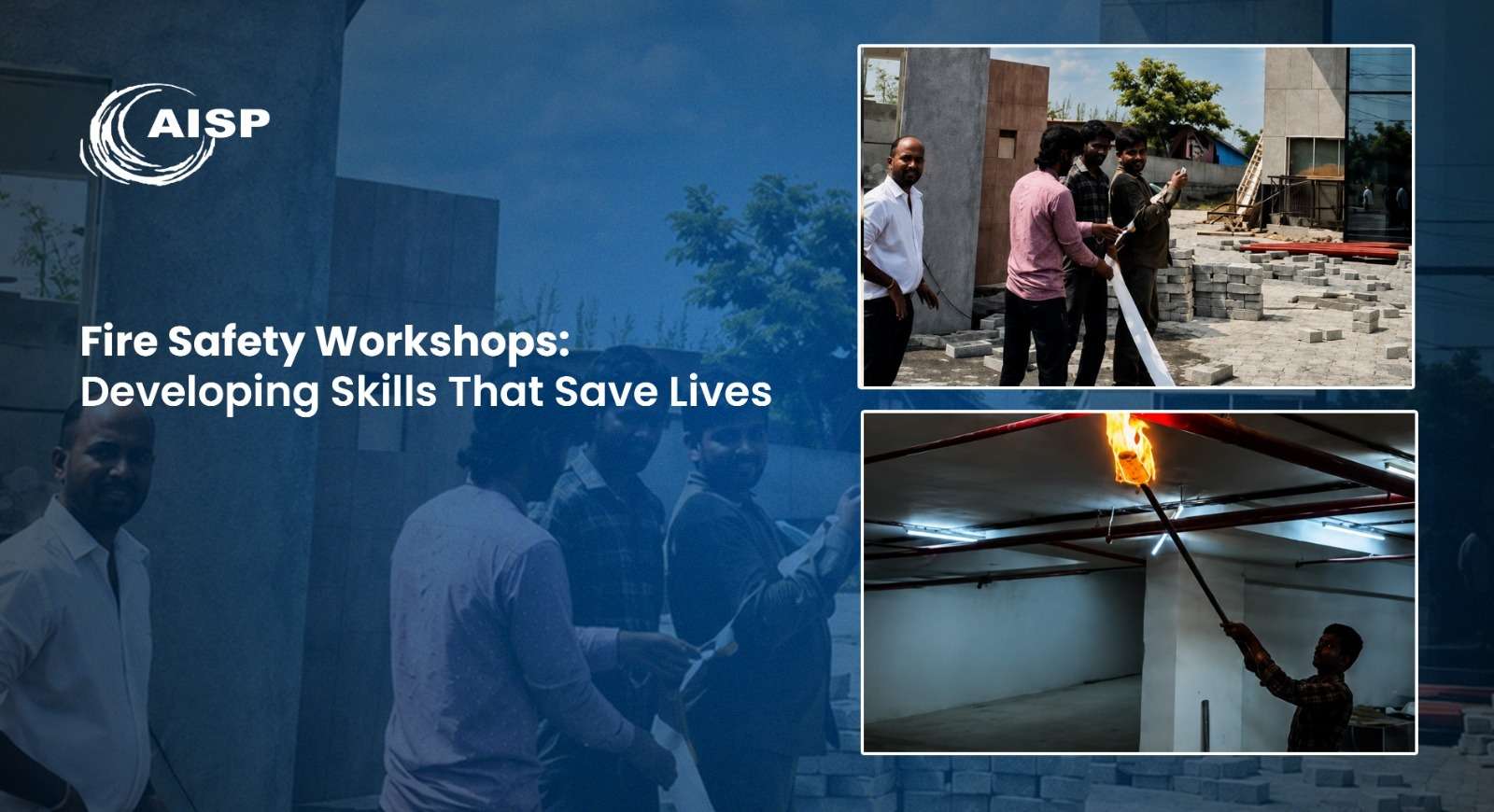
Participants receive hands-on demonstrations on the correct use of fire extinguishers, fire alarms, and other safety equipment. These practical exercises help them apply their learning confidently in real-life situations.
Interactive Learning Activities
To make learning more engaging, AISP includes group discussions, question-and-answer sessions, fire drills, and team-based activities. These interactive methods encourage active participation and improve knowledge retention.
Real-Life Emergency Scenarios
Workshops include simulated emergency situations that allow participants to practise evacuation procedures, emergency communication, and decision-making under pressure. This practical experience helps them stay calm and respond effectively during actual fire emergencies.
Final thought
Fire safety is not only about responding to an emergency; it is also about being prepared to prevent one. Fire Safety Workshops provide participants with practical knowledge, essential skills, and greater confidence to identify hazards and respond appropriately when needed.
Through expert guidance, practical demonstrations, interactive activities, and regular awareness initiatives, AISP helps promote a culture of preparedness and responsibility. Building these skills today can make a meaningful difference when it matters most.
Frequently Asked Questions (FAQs)
1. What key areas are covered in a Fire Safety Workshop?
A workshop may cover fire prevention, hazard identification, emergency evacuation, fire extinguisher handling, alarm procedures, emergency communication, and basic response protocols.
2. How does fire safety training improve emergency preparedness?
Training familiarises participants with emergency procedures and evacuation protocols, helping them respond in a structured and timely manner rather than reacting with confusion during an incident.
3. Why are practical demonstrations important in fire safety training?
Practical demonstrations allow participants to understand how safety equipment and emergency procedures work in real situations. This helps reinforce theoretical knowledge and improves confidence in responding appropriately.
4. How do Fire Safety Workshops contribute to workplace safety?
They help organisations build a stronger safety culture by increasing employee awareness, improving emergency response capabilities, identifying potential risks, and encouraging adherence to established safety procedures.
5. What role do fire drills play in fire safety preparedness?
Fire drills provide an opportunity to practise evacuation and emergency response procedures. They also help organisations evaluate their preparedness and identify areas that may require improvement.
6. How can organisations maintain fire safety awareness after a workshop?
Organisations can conduct refresher training, schedule regular fire drills, maintain safety equipment, review emergency procedures, and regularly communicate fire prevention and safety guidelines to employees.