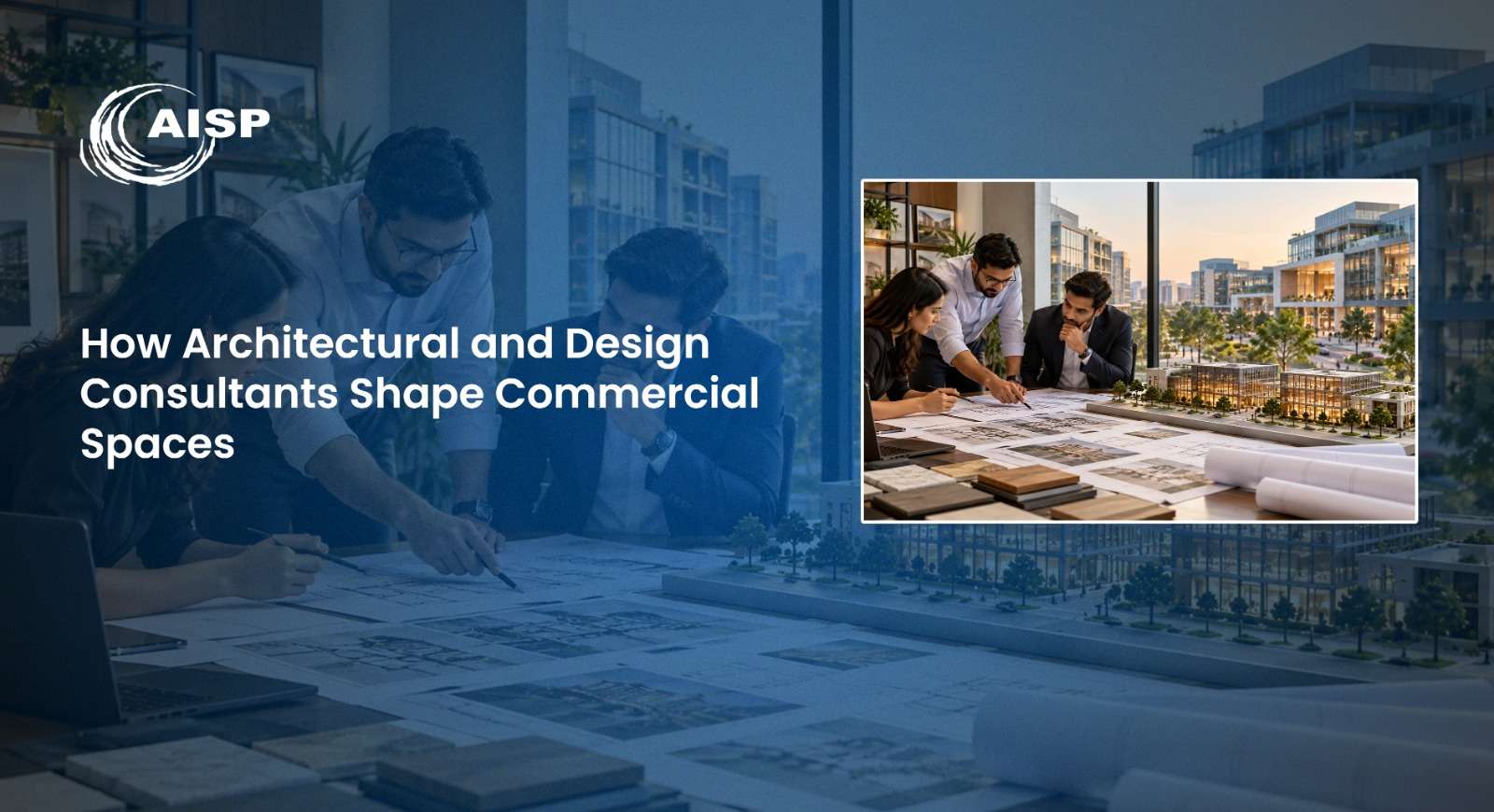
How Architectural and Design Consultants Shape Commercial Spaces
Introduction
A successful commercial space is more than an attractive building. It must support business operations, provide a positive experience for visitors, utilise space efficiently, and deliver long-term value to its owners.
Whether it is an office, hotel, shopping mall, or commercial complex, every design decision influences how the property functions and performs.
However, turning a business vision into a practical development requires more than creative ideas. It involves technical planning, cost considerations, regulatory requirements, and coordination between multiple stakeholders.
This is where architectural and design consultants play an important role. They help developers transform concepts into functional commercial spaces while ensuring that design decisions align with project objectives, budgets, and operational requirements.
Why Are Architectural and Design Consultants Important?
Commercial developments involve several interconnected requirements. A design that looks impressive on paper may create operational challenges if it does not consider accessibility, movement, infrastructure, maintenance, and space utilisation.
Professional consultants help bridge this gap by combining design expertise with practical project understanding.
Their involvement helps developers make informed decisions, minimise planning gaps, and create spaces that are both visually appealing and commercially functional.
6 Ways Architectural and Design Consultants Shape Commercial Spaces
1. Designing Around Business Objectives
Every commercial property serves a different purpose. An office needs productive workspaces, a hotel requires guest comfort, while a shopping mall must encourage visitor movement and engagement.
Architectural and design consultants understand these requirements before developing design solutions. They consider the target audience, business model, expected footfall, functional requirements, and future expansion possibilities.
This ensures that the design supports the commercial purpose of the property rather than focusing only on appearance.
2. Maximising Space Utilisation
Poor space planning can result in underutilised areas, inefficient movement, and unnecessary construction costs.
Consultants evaluate how different spaces connect and function. They plan entrances, corridors, common areas, parking, service zones, and activity spaces to improve the overall layout.
For developers, better space utilisation can create more functional areas and additional commercial opportunities without unnecessarily increasing the project’s footprint.
3. Balancing Design Quality with Project Costs
An attractive design must also be financially practical. Expensive materials, complex structural elements, and unnecessary design features can increase construction and maintenance costs.
Experienced consultants help evaluate material choices, design alternatives, technical requirements, and long-term maintenance considerations.
This allows developers to balance design expectations with budget limitations while maintaining essential quality and functionality.
4. Improving User Experience and Accessibility
The success of a commercial property also depends on how easily people can use it.
Clear navigation, convenient entrances, adequate lighting, accessible facilities, and well-planned common areas improve the experience of visitors, employees, and customers.
Consultants consider these aspects during the design stage to create spaces that are comfortable, accessible, and practical for different users.
5. Incorporating Sustainable and Low-Maintenance Design
Commercial buildings require continuous maintenance. Decisions made during the planning stage can significantly influence future operating expenses.
Consultants can help incorporate energy-efficient lighting, natural ventilation, durable materials, efficient water systems, and sustainable construction practices.
These considerations can improve building performance, reduce resource consumption, and minimise long-term maintenance requirements.
6. Connecting Design with Construction and Execution
Even a well-developed design can face challenges if it is not properly coordinated with construction activities.
Architectural drawings, structural requirements, MEP systems, material specifications, and contractor activities must work together.
Professional consultants help identify design conflicts, coordinate technical requirements, and improve communication between project stakeholders. This can reduce avoidable revisions, execution delays, and costly rework.
What Should Developers Look for When Hiring Architectural and Design Consultants?
Choosing the right consultancy partner is an important decision because early design choices influence the entire project lifecycle.
Before appointing a consultant, developers should evaluate:
- Commercial project experience: Understanding of offices, hotels, malls, and other commercial developments.
- Technical expertise: Knowledge of architectural, structural, and building service requirements.
- Cost awareness: Ability to recommend practical solutions within project budgets.
- Coordination capabilities: Experience working with contractors, engineers, vendors, and other stakeholders.
- Project management approach: Ability to align design decisions with timelines, quality standards, and execution requirements.
- Long-term perspective: Consideration of maintenance, adaptability, and future property performance.
The right partner does more than deliver drawings. They help developers make better decisions throughout the development process.
How AISP Supports Commercial Project Development
A successful commercial development requires design, planning, budgeting, construction, and execution to work towards the same objectives.
AISP brings a structured project management and consultancy approach to help developers coordinate these different aspects.
Its support includes:
Design and Planning Coordination: Helping align design requirements, technical specifications, and project objectives.
Cost and Budget Management: Supporting cost evaluation and expenditure monitoring against planned budgets.
Stakeholder Coordination: Improving communication between architects, consultants, contractors, vendors, and project teams.
Quality Monitoring: Monitoring construction activities to ensure execution follows approved specifications and quality expectations.
Project Timeline Management: Tracking progress and coordinating activities to minimise avoidable delays.
End-to-End Project Oversight: Connecting different stages of project development through an integrated project management approach.
For developers planning commercial complexes, hotels, malls, and large-scale real estate developments, AISP helps bring greater structure and coordination to project execution.
The focus is not simply on completing construction. It is on ensuring that planning and execution decisions contribute to the project’s overall commercial and operational objectives.
Conclusion
Commercial spaces must do more than look impressive. They need to function efficiently, support business objectives, provide a positive user experience, and maintain their value over time.
Architectural and design consultants play an important role through thoughtful planning, technical coordination, cost awareness, and practical design solutions.
However, the real value comes when design decisions connect seamlessly with project execution. Partnering with an experienced project consultancy like AISP can help developers maintain this alignment and move towards better-planned, efficiently executed commercial developments.
Planning a commercial development? Connect with AISP to bring your project vision, design requirements, and execution goals together.
Frequently Asked Questions
1. What do architectural and design consultants do?
They help plan building designs based on functional requirements, aesthetics, technical considerations, budgets, and project objectives.
2. Why are architectural consultants important for commercial buildings?
They help improve space utilisation, functionality, accessibility, design quality, and coordination with technical requirements.
3. How do design consultants help reduce construction costs?
They evaluate materials, layouts, design alternatives, and technical requirements to identify practical solutions and minimise avoidable changes during construction.
4. When should developers hire architectural and design consultants?
Ideally, consultants should be involved during the early planning and feasibility stages so that design decisions align with budgets, technical requirements, and business objectives.
5. How does AISP support commercial development projects?
AISP provides project management and consultancy support through planning coordination, cost management, stakeholder coordination, quality monitoring, and project execution oversight.